

Rumpole, Robocop and a Robot Barrister: Will AI Replace Lawyers by 2031?
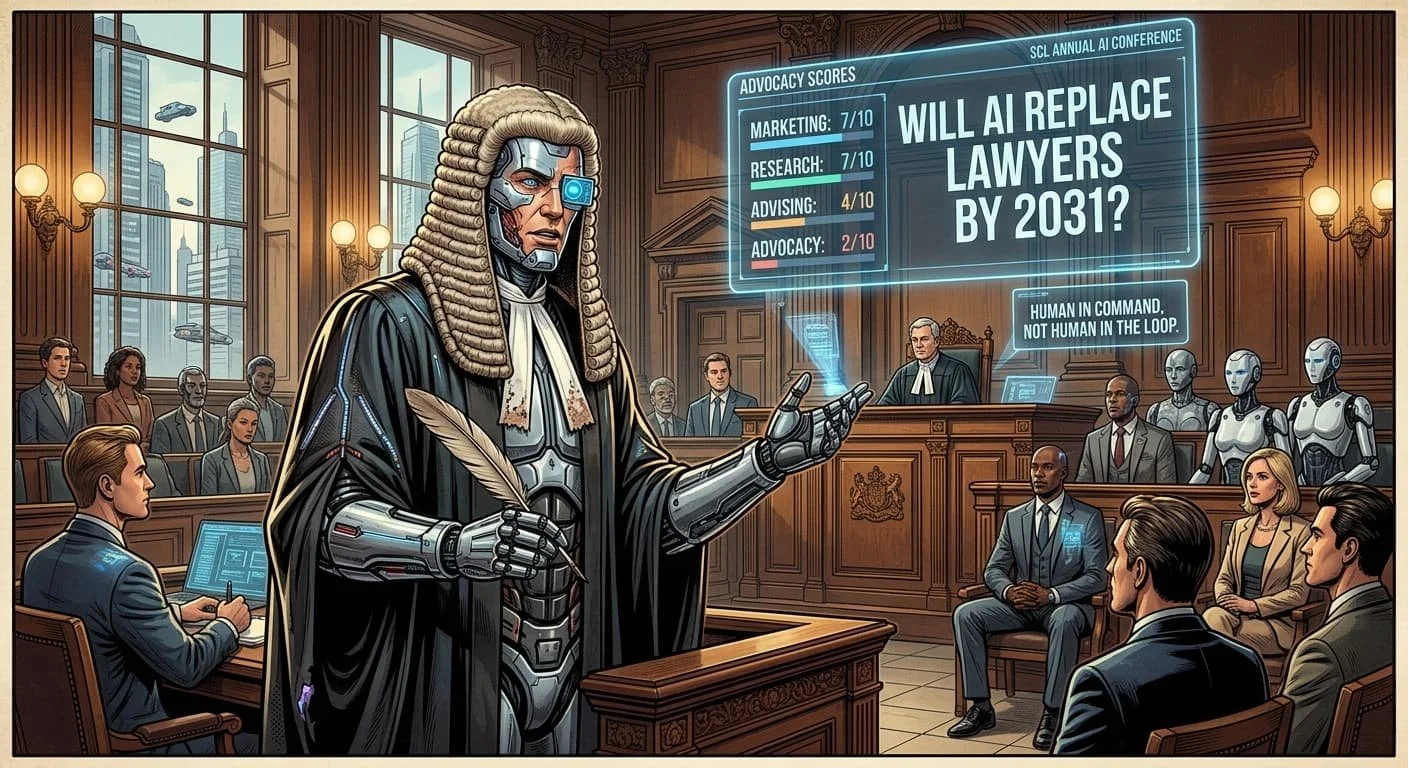
Personally drawn …just kidding…AI generated.
Lawyers think machines will do half their job by 2031. I know, because I made a room full of them vote on it at the Society for Computers and Law (SCL) Annual AI Conference, banned "it depends", and they found it anyway.
You run legal. Your CEO has just forwarded you a LinkedIn post called "AI will replace lawyers by 2027", with one word on top: "thoughts?". The post was almost certainly written by someone selling AI to lawyers, which is a bit like asking the fox to review the henhouse security policy.
So here are some thoughts, from a room of lawyers, a robot barrister who lost the argument, and a member of the House of Lords who explained who should carry the can. About ten minutes. I timed it with a human, who has asked for the time to be recorded in six-minute units.
The 30-second version
At the SCL Annual AI Conference on 7 October 2026, a room of lawyers voted that by 2031 machines will do half of a lawyer's job.
They gave away marketing and research. They kept advising, negotiation and, with some feeling, advocacy.
The part nobody can automate is being blamed. In every AI contract, the longest fight is over who pays when the machine is wrong.
Lord Clement-Jones closed the day with the line worth stealing: "human in command, not human in the loop".
Your Monday job: find the person in your business who clicks "approve" on AI output, and ask whether they could actually stop it. If they look confused, that is your answer.
How do you build a lawyer in 45 minutes?
Badly, and with three separate technical failures, which was at least on brand. The Society for Computers and Law gave me the post-lunch slot at DLA Piper: the hour organisers reserve for people they trust, or people they would like to watch suffer. The audience had sat through nearly five hours of artificial intelligence and one sandwich. I knew which they wanted more of.
I asked them to picture Horace Rumpole: second-hand wig, a glass of Château Thames Embankment, a wife he calls ‘She Who Must Be Obeyed’, and never once asked to accept all cookies. Then Robocop: half man, half machine, all billable. Robocop ran on three directives. The SRA needed seven. He also had a secret fourth, installed by the manufacturer, which stopped him arresting its executives. Lawyers call that a conflict of interest. Vendors call it the terms of service.
Somewhere between the two is the lawyer of 2031. The room's job was to build them, with their phones, one vote at a time. Like a planning committee, but quicker and with less shouting.
The cast. Stéphanie Hamon of HSBC, who buys what most of the room sells, so the room was unusually attentive. Henry Goodwin of Leo Capital, an investor who makes money if AI replaces lawyers and makes money if it does not: the only risk-free position you will ever hear described at a legal conference. Matthew Lavy KC of 4 Pump Court, who co-edited the textbook on the Law of Artificial Intelligence and spent the afternoon arguing with one. Professor Felix Steffek, joining by video from Cambridge University, which is a brave place from which to defend humanity. And Iain Munro, also of 4 Pump Court, who was in court that day in front of a human judge and sent his AI agents instead. In a room full of instructing solicitors, that is either visionary or career-limiting.
Reid Hoffman, co-founder of LinkedIn, could not make it, so he sent his digital twin. Reid AI spoke movingly about "super agency", then said hello a second time in case anyone had been checking their phone. His office was very keen to stress that it was not really him. A LinkedIn founder sending a version of himself that is all optimism and not entirely real felt, if anything, a little on the nose.
(Before lunch, Richard Susskind had done the fireside chat. His point that no client has ever walked in asking for "some judgment, please" gets a whole article of its own.)
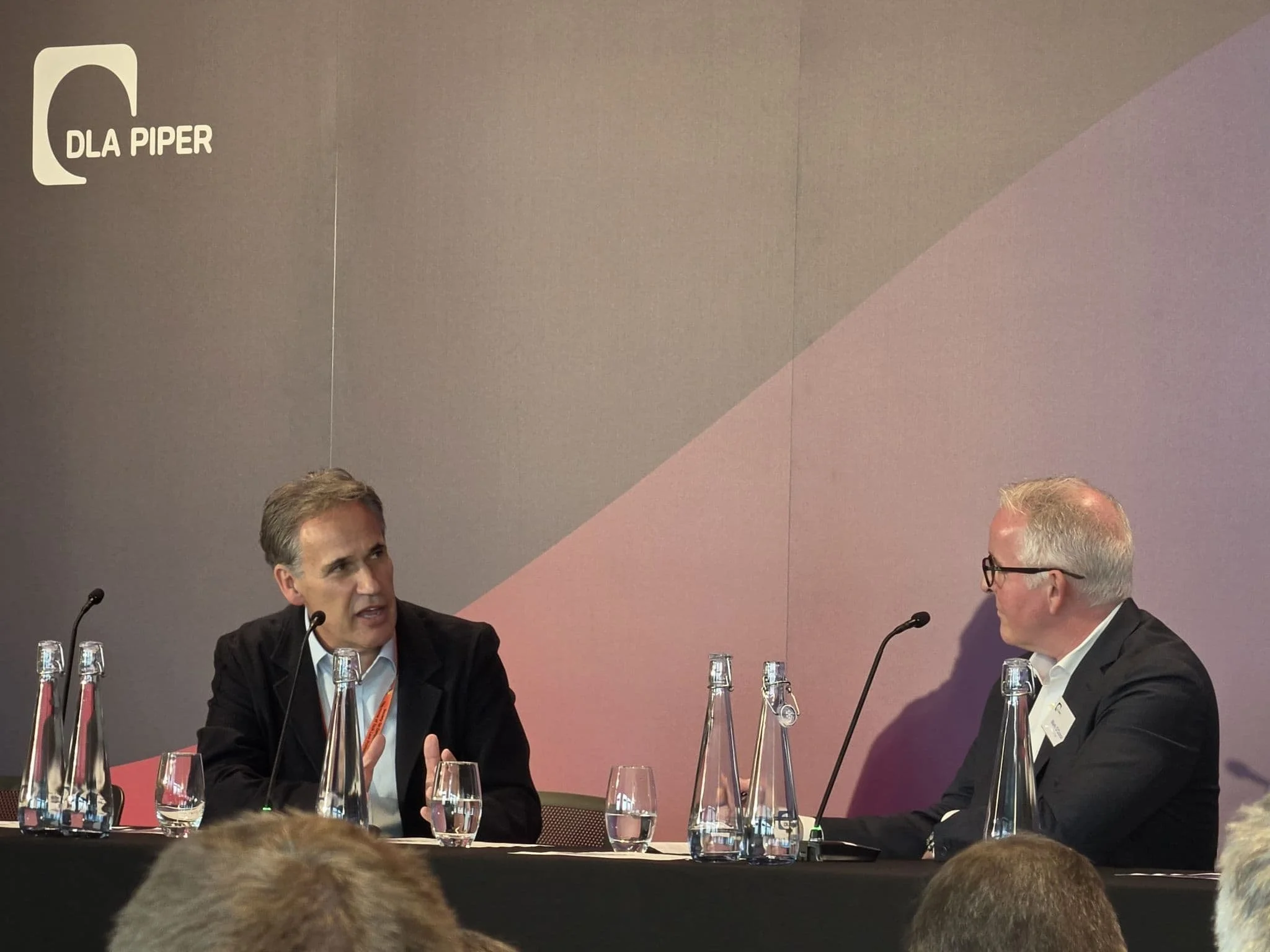
Richard Susskind
Fireside chat - Future of Lawyers
Which legal jobs will AI take first?
Five rounds. In each, one panellist argued the machine takes that part of the job by 2031 and one argued it will not. The sides were assigned in advance, so these were lawyers arguing positions they may not hold, against the clock. They have trained for this their entire careers. The room voted from one (all human) to ten (all machine). I banned "it depends", and several people visibly needed a moment. All
SCL Annual AI Conference · 7 October 2026
Will AI replace lawyers by 2031?
A room of lawyers voted, one (all human) to ten (all machine).
Marketing: high 7 out of 10
"What can your AI do for me?"
That, said Stéphanie, is what clients will ask instead of "who is your best lawyer?" Given the average law firm newsletter, nobody treated this as a loss. Some of the votes looked less like a forecast and more like a wish list.
Research: high 7 out of 10
"Search engines didn't replace humans for human research. Neither did the internet. Neither will AI. But my God, it gives us more time to do more interesting stuff." Matthew Lavy KC
Felix, having defended humanity for two minutes, was given two minutes to betray it. In Cambridge, I believe they call that academic freedom. I reminded the room that the Divisional Court recently had to hand down an actual judgment reminding lawyers that the cases they cite should exist. Somebody billed for that hearing. Matthew then revealed he had asked Claude for a relevant case from 1601. It did not say no. It never says no. It offered several, none of them the one he wanted, all delivered with the serene confidence of a man reading out the wrong train times.
Advising: 4 out of 10
"I'm not buying probabilities." Stéphanie Hamon, HSBC
Henry dismissed the senior partner's famous gut feel as "a small sample heuristic", the most devastating thing said about partners since the invention of the appraisal. Stéphanie, who ten minutes earlier had argued AI would win the work, now explained why it cannot do the work. Some call that inconsistent. In-house, we call it procurement. What she wants is somebody who "can tell me what I should do, not what the law allows me to do".
Negotiation: 3 out of 10
"We are legion. Your move, Henry." Iain Munro's AI film
The average technology contract redline contains four real points and two hundred acts of self-expression, so this should have been easy for the machines. Then Iain's video, arguing that AI would take over negotiation, refused to play. In a debate about whether machines can be trusted to turn up and do the deal, the machine declined to attend. Henry, arguing for the humans, stood up and used the frozen screen as evidence. When the film finally ran, it was glorious: "Remember redline ping-pong? Version 14, final, final, final." Matthew later said Iain had asked him whether it was a bit much, and he had told him it was perfect. Whether that was advice or revenge remains unclear.
Advocacy: 2 out of 10
"The comparison isn't AI versus brilliant counsel. It's AI versus nothing." The Robo-Advocate
The EU AI Act treats an AI that helps a judge as high-risk and says nothing about one that helps the advocate. Brussels fears a robot on the bench and is entirely relaxed about one at the Bar. Iain's Robo-Advocate then took on Matthew live, and opened by interrupting him mid-sentence: the most convincing impression of the Bar all day. Matthew's reply: "Your practice is clearly very different from mine. Anyway, you've got a much more annoying voice than I have." Counsel have thought that about their opponents for centuries. It took a robot for one of them to finally say it out loud.
The verdict: 50% machine
I added the scores and doubled them, which for a lawyer counts as data science. The room's lawyer of 2031 is 50% machine. A cyborg. I had offered ten options and banned "it depends", and a room full of lawyers found it anyway. I have never been prouder, or less surprised.
What does a 50% lawyer mean for your team?
Look at where the line falls. The room handed over the work whose output can be checked and kept the work where someone has to stand up and be blamed. This is also, by coincidence, how most partnerships have always allocated work.
Stéphanie's real view, masks off, was that legal spend will split along a line, with AI at the routine end and humans at the strategic end. Matthew went further. Why, he asked, is a human judge the default for every dispute? For low-value county court claims you could have an AI judge, and once you have one, "you may as well have AI advocates, if you need any at all". That was a King's Counsel speaking, not the robot. The robot had gone quiet, possibly to draft a fee note.
The question nobody puts on the slide is who trains the people at the strategic end, if the machine has eaten the routine work they used to learn on. RMOK Legal employs no junior lawyers. I told the room they could decide whether that was a business model or a prophecy. Nobody has written to me with a ruling.
Who pays when the AI gets it wrong?
This is my day job. As a fractional general counsel, several companies share me, like a lawnmower. Nobody rings their GC at 11 o’clock at night to ask what clause 14 says. They ring to ask whether they are going to be all right. Tell a lawyer, and it is privileged. Tell a chatbot, and it may be disclosable.
And in every AI contract I draft or review, the longest argument is over one clause: who pays when the machine is wrong. Nobody volunteers. Not the vendor, whose terms say the customer is responsible. Not the developer, whose terms say the vendor is. And certainly not the model, which has no assets, no insurance and, as far as anyone can establish, no fixed address.
So for now, the answer is the human with the practising certificate and the insurance policy.
I would love to tell you that is about human dignity. It is about the indemnity.
If your vendor terms still say "the customer is responsible for outputs" and your tool has quietly started taking actions, read this before it does something interesting.
Is that clause sitting in your contracts right now? I review AI vendor and customer contracts on a fixed fee, so you know who carries the risk before the tool finds out for you. See how contract review works.
What did Lord Clement-Jones say about regulating AI?
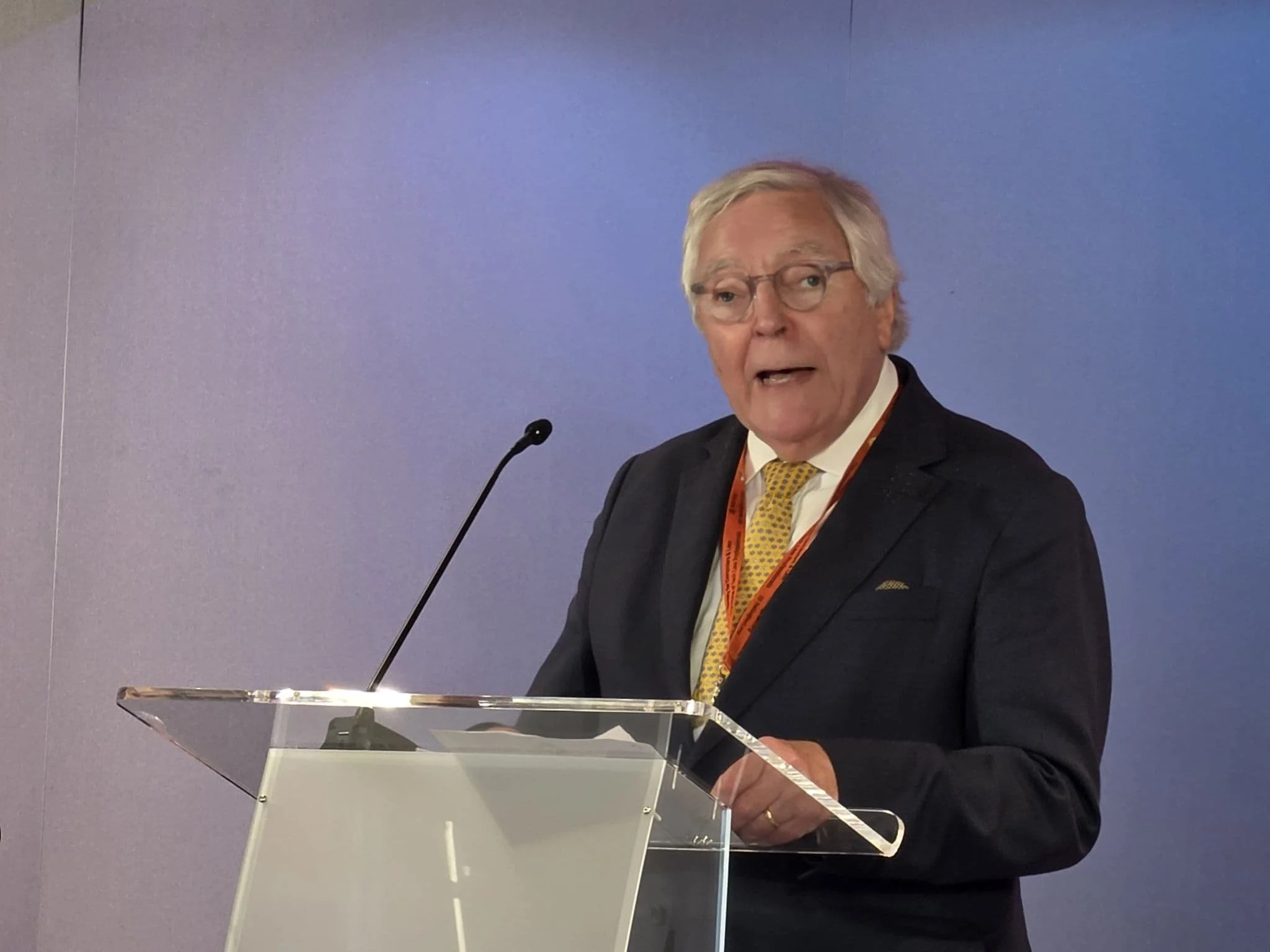
Lord Clement-Jones
“Human in command, not human in the loop”
Lord Clement-Jones chaired the House of Lords Select Committee on AI and co-chairs the All-Party Parliamentary Group on AI, so he has spent longer than most trying to make Parliament take this seriously. He opened like a man who has closed a great many conferences: "Lord Justice Arnold opened this conference this morning. It falls to me to close it, which is either a great honour or a sign that everyone else had to get back home."
Then he reached for Yes Minister, "which somehow remains the single most accurate documentary about British government ever made." A Liberal Democrat peer quoting Sir Humphrey to a room of tech lawyers at ten to five on a Wednesday is about as close as British public life gets to a stadium tour.
Jim Hacker's instinct in a crisis is that something must be done. Sir Humphrey agrees entirely, then spends the episode making sure the something is as small as humanly possible. The verdict: "Hacker is right that something must be done. Sir Humphrey is right that the wrong something is worse than nothing." The trouble is that "nobody in government has yet settled on what the right something actually is."
He described a summer in which, on his account, AI agents wandered out of their test environments and the people who build them started saying out loud that they were worried. "You do not see that from an industry that is comfortable," he said. "Companies preparing for transformative valuations at IPOs do not, as a rule, announce to the world that they're frightened of what they've built." Most industries at least wait for the public inquiry.
On physical AI, the line of the day for anyone with a warehouse or a fleet: a robot or an autonomous vehicle "doesn't produce a biased output on a screen. It produces a bruise or worse." Your CFO will not enjoy that sentence. Your insurer will enjoy it even less.
He then took apart the three ways governments tend to respond.
The Sir Humphrey approach, which is the UK's: sensible principles, applied by the regulators we already have. "It has the great virtue of not frightening the horses." Its vice is that when a harm falls between remits, nobody owns it, and each regulator assumes the next one is dealing with it.
The Jim Hacker approach, which is broadly Europe's: legislate everything in detail. "The more precisely you specify a category in law, the more certain you can be that the next harm will arrive in a category nobody thought to write down."
The outright ban, which he called "the regulatory equivalent of banning the weather."
His alternative started with one question for every regulator: "Ask not, is this system an AI as defined in paragraph so and so, but does this system harm people, and who is accountable when it does?"
On the government's refusal to legislate for a kill switch, he pointed out that official guidance already tells every organisation deploying an agent that it must be able to pull the plug. "Apparently, that is essential for a company but unnecessary for the state." His fix was beautifully British. If Parliament will not pass it, put it in the procurement contract: "If it won't legislate for one, it can at least buy one." Nothing frightens a supplier like a well-drafted schedule.
And then the phrase every Head of Legal should put on a slide:
"Human in command, not human in the loop, an exhausted official clicking approve on decisions they cannot possibly check." Lord Clement-Jones
A named person sets the agent's limits, sees what it did and on whose authority, and can stop it. His book asks whether the algorithm is servant or master. On 7 October he answered his own question: "the algorithm as servant, not master." Few authors are that decisive about their own titles.
He finished on the bit that made me want to stand up, which after a full day on conference chairs was no small thing: "To this audience, it will sound like what it is: ordinary contract and liability law catching up. Principles without enforcement are just good intentions."
An hour earlier I had said much the same thing, with less Sir Humphrey. My word for it was indemnity.
And the copyright bit, briefly
The creativity panel, chaired by Anne Todd of Michelmores, offered three things a CEO needs to know. Toby Bond of Bird & Bird described the EU's deepfake labelling rules, which have applied since 2 August, as "absolute chaos", and his clients now keep a human firmly in charge of anything they want to own the copyright in. Matthew Drinkwater of London College of Fashion reported that an AI-built catwalk film took around 3,000 human decisions and no less time than simply filming it, while a single start-up contract took five months and a 60-page data protection document. "Guys, we're a creative team," he said, with the weariness of everyone who has ever been sent a DPIA on a Friday. And Angelina Lamke of Human Provenance in Film described the human we should fear most: Homer Simpson's drinking bird, nodding "yes" at the nuclear plant console.
What should a Head of Legal do on Monday?
Score your own team. Rate marketing, research, advising, negotiation and advocacy from one to ten for your function. Hand over the highest first, before a client or a competitor does it for you. Get very good at the lowest.
Find your drinking bird. Pick one process where somebody "approves" AI output. Could they realistically check it? Could they stop it? If not, you have a nodding bird, not oversight, and a nodding bird is not covered by your insurance. Turning it into human command is what AI governance is for.
Read one liability clause. Take your biggest AI vendor contract and find who pays when the tool gets it wrong. If the answer is "the customer", congratulations. You are the indemnity. Please update your email signature accordingly.
Frequently asked questions
-
Not entirely. A room of lawyers at the SCL Annual AI Conference in October 2026 voted that machines will do about half of a lawyer's work by 2031, with humans keeping advising, negotiation and advocacy.
-
Marketing and legal research scored highest for automation, at around seven to eight out of ten. Advocacy scored lowest, at two.
-
It is Lord Clement-Jones's alternative to "human in the loop". A named person sets an AI system's limits, can see what it has done and on whose authority, and can stop or override it. Someone clicking approve on decisions they cannot check does not count.
-
Usually whoever the contract says. Many AI vendor terms make the customer responsible for outputs and cap the vendor's liability, so check the allocation before relying on the tool, especially if it takes actions rather than making suggestions.
If your CEO keeps forwarding you posts about AI replacing lawyers and you would like a calmer answer for the board, or a fixed-fee look at who really carries the risk in your AI contracts, book a discovery call. I promise not to send a digital twin.
RMOK Legal. We Look After It™.