An Astronaut, a Leadership Coach, and 400 Lawyers Walk Into The Chancery Rosewood...

Tim Peake CMG (far left), the first British astronaut to visit the International Space Station and conduct a spacewalk during his six month mission.
In brief: The Clio Innovate Legal Summit 2026, held on 14 April at The Chancery Rosewood in London, featured a keynote from astronaut Tim Peake on decision-making under pressure, a session from Dr Katie Best introducing her SOLVE leadership framework, and panels on how UK law firms are deploying AI in practice. The key theme: the biggest barrier to AI adoption isn't the technology. It's the human side of change.
What I Learned at Clio's Innovate Legal Summit 2026 About AI, Fear, and the Messy Business of Being Human
By Rory O'Keeffe, Founder, RMOK Legal
Today I attended Clio's Innovate Legal Summit 2026 at The Chancery Rosewood in London, and I need to tell you about it. Not because I'm contractually obligated (I'm not), but because it was, genuinely, one of the most thought-provoking days I've had in legal tech. And I've had a few.
The lineup alone was enough to raise an eyebrow. An astronaut. A leadership psychologist. Panels of law firm partners openly admitting they don't have all the answers. In legal services, that level of candour is practically revolutionary.
But here's what made it special: this wasn't another conference where someone shows you a demo, reads a slide deck, and tells you AI will change everything. This was a day about people. About the fear, the resistance, the ego, and the exhaustion that comes with dragging an organisation through transformation when most of the humans inside it are quietly terrified.
And then an actual astronaut told us about nearly drowning in space. So there's that.
Key Takeaways from Clio Innovate Legal Summit 2026:
Dr Katie Best's SOLVE framework provides a five-step model for leading change: State, Open, Layout, Venture, Elevate. Dr Katie Best is a visiting fellow at the London School of Economics and author of The Ten Toughest Leadership Problems.
Tim Peake CMG''s decision-making framework: gather facts, generate options, apply risk reasoning, take action. Tim Peake CMG is a former European Space Agency astronaut and British Army test pilot.
Law firms have linked AI adoption to firm-wide bonuses, targeting one million Copilot prompts
Law firms are building custom client-facing AI tools for employment law
The cost of not adopting AI was cited at approximately £100,000 per solicitor per year
Most business decisions are "two-way doors" that can be reversed, not permanent commitments
What is the SOLVE framework and how does it apply to law firms?
The afternoon opened with Dr Katie Best, visiting fellow at the London School of Economics and author of The Ten Toughest Leadership Problems. If that title doesn't make you lean in slightly, I don't know what will.
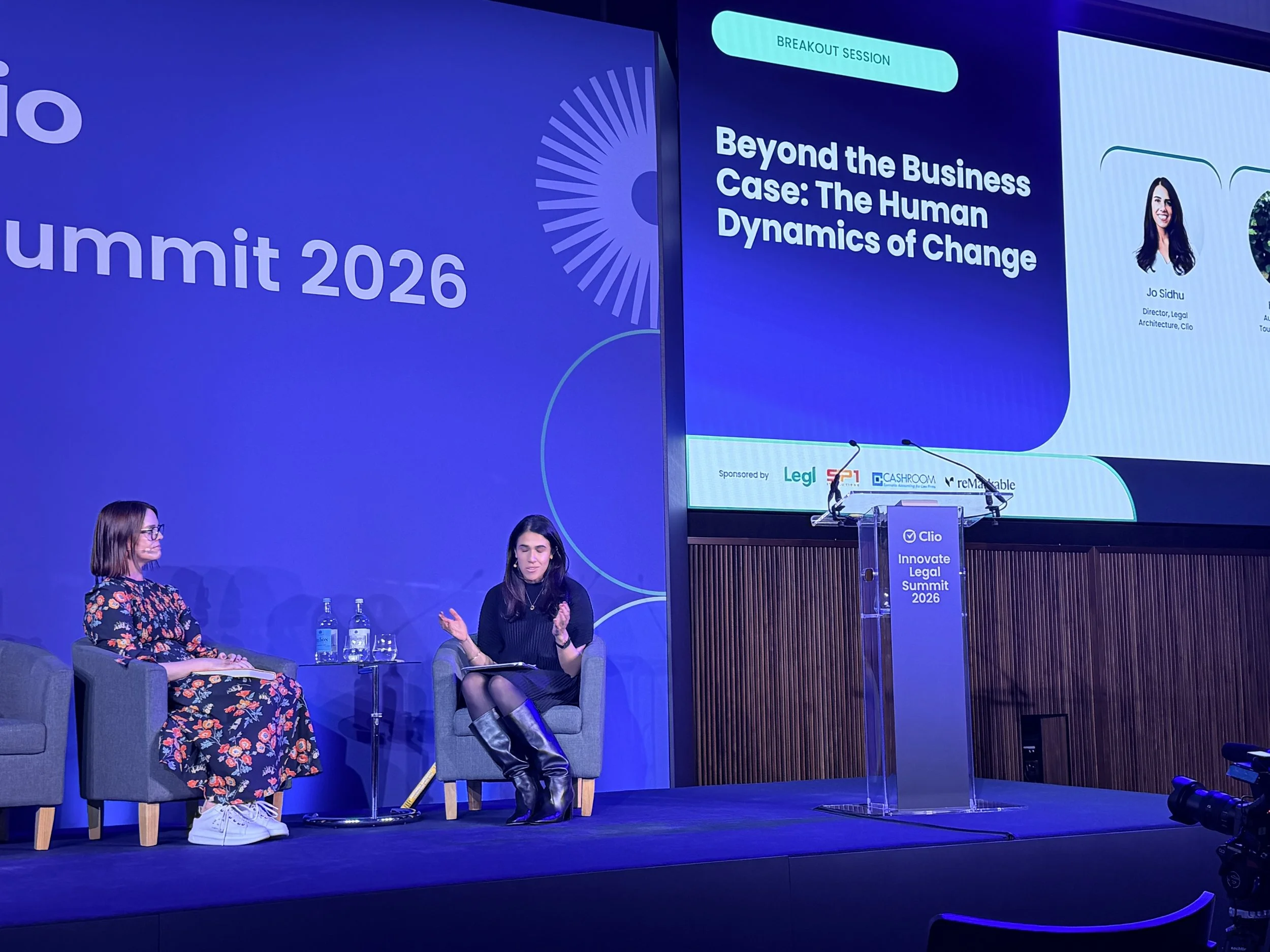
Katie’s session tackled something that most legal AI conferences avoid like a conflict check: the human side of technology adoption.
Not the business case. Not the ROI spreadsheet.
The bit where real people with real anxieties are asked to fundamentally change how they work.
Her SOLVE framework is beautifully simple, and I left wanting to apply it to about six different situations in my own practice:
S - State the problem (one sentence, no solutioning yet)
O - Open the box (do your own research, talk to people, listen)
L - Layout your solution
V - Venture forth (actually do the thing you said you'd do)
E - Elevate your learning (apply what you've learned elsewhere).
What struck me most was her point about why change initiatives stall. It's not usually the technology. It's that people are scared. They don't understand why they're being asked to change. They haven't been part of the conversation. Or, quite simply, nobody bothered to walk the walk themselves.
One insight that landed particularly well: resistance to change isn't people being difficult. It's instinctive. We're programmed to be wary of the unfamiliar because, as Katie pointed out, it used to keep us safe in the wild. The job of a leader isn't to bulldoze through that instinct. It's to create an environment safe enough for people to be brave.
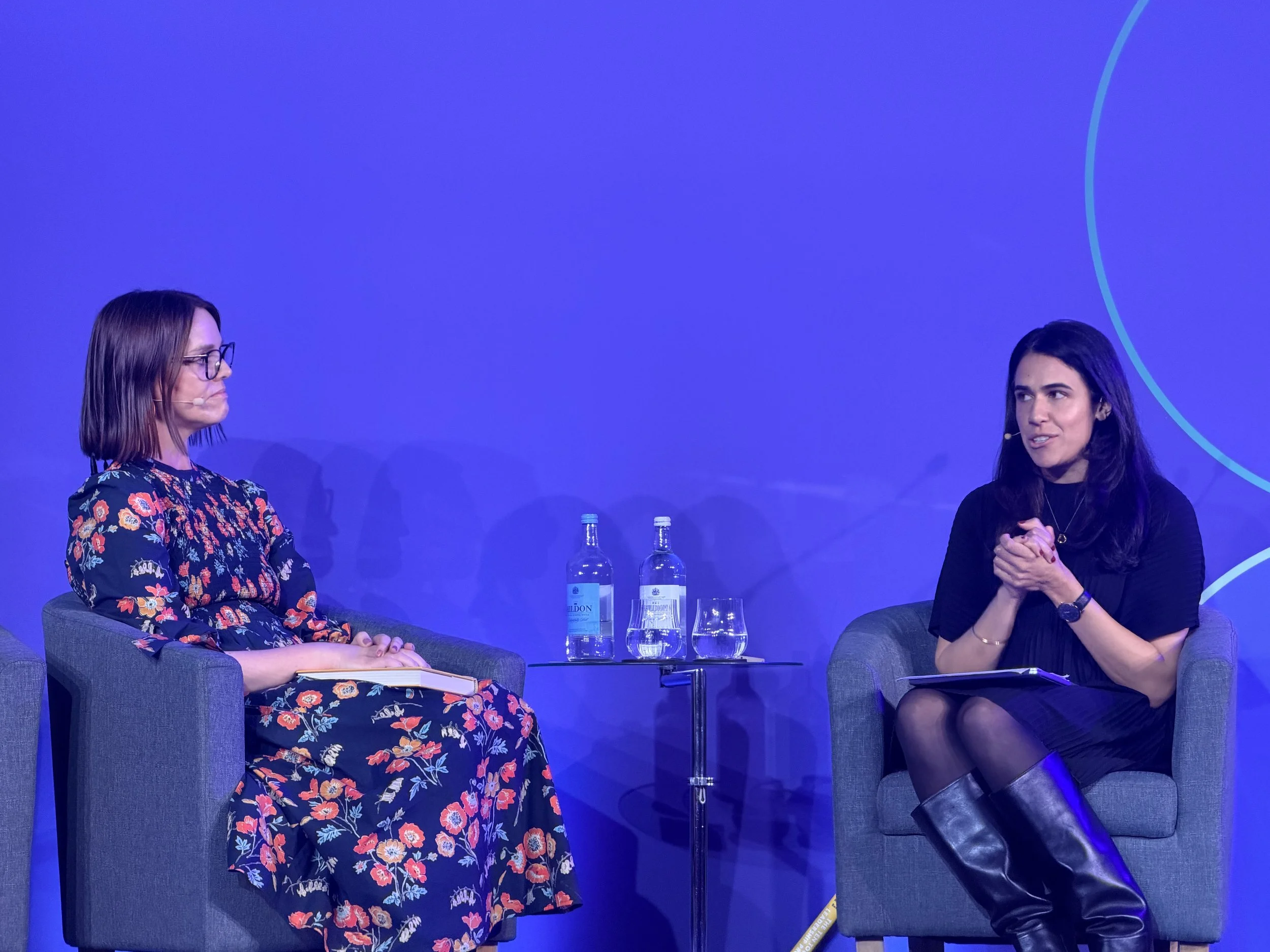
Dr Katie Best (left side)
Author of The Ten Toughest Leadership Problems
And her advice on burnout was a masterclass in saying less to achieve more. She told the room, quite directly, to stop applying pressure. Law firms are full of people who naturally pressurise themselves. You don't need to pile on more. Give permission for the break. Celebrate what's been achieved. Then keep going.
I got to speak with Katie briefly afterwards, and I can confirm: she's as brilliant in person as she is on stage. I may have mentioned my podcast. She may be a future guest (fingers crossed). The book is outstanding, and I'd recommend it to anyone leading a team through any kind of change, not just in law.
How are law firms using AI in 2026?
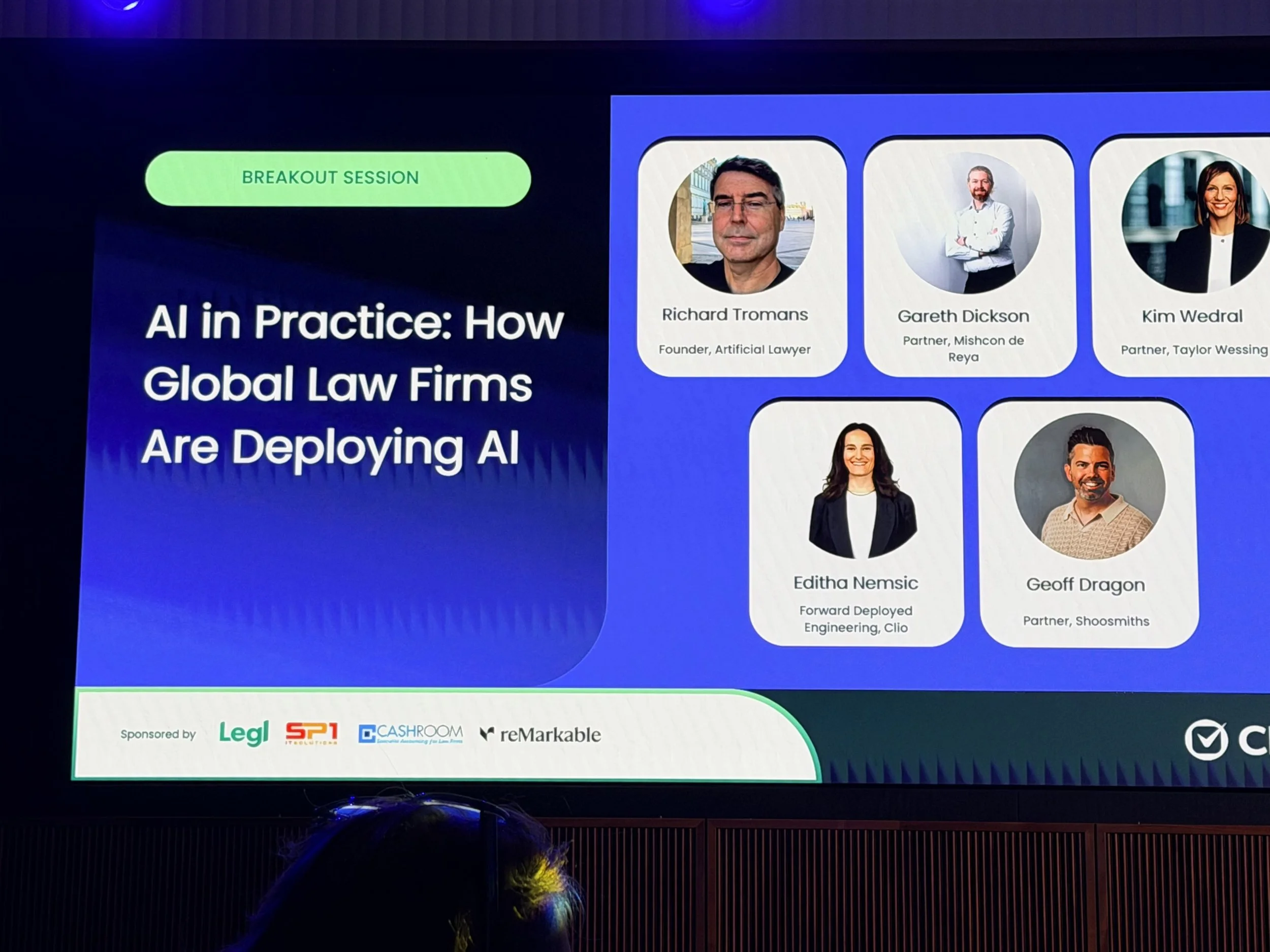
The panel on AI deployment in UK law firms was where theory met practice. Chaired by Richard Troman of Artificial Lawyer, it featured partners from Taylor Wessing, Shoosmith, and Mischon de Reya and Clio.
What I loved about this session was the honesty. These are firms at different stages of the AI adoption journey, and nobody pretended otherwise.
A few highlights that stuck with me:
Shoosmiths linked AI usage to bonuses. If the firm collectively hits a million prompts on Copilot, an additional million pounds gets added to the team bonus pool. That's roughly three prompts per person per day. It's not a revolution. It's a nudge. And it's working.
Law firms are building custom AI tools for clients, not just using AI internally. They've launched employment-specific tools that clients can use directly, reducing the need for routine legal queries while deepening the strategic relationship. That's not AI replacing lawyers. That's AI making lawyers more valuable.
Law firm’s approach to attendance notes was refreshingly practical. They take Teams meeting transcripts, feed them through a tailored prompt, and generate detailed attendance notes in minutes. It sounds mundane. It saves hours. And it means the most junior person on a call isn't spending their evening writing up what happened while the rest of the team has gone home.
One panellist put it perfectly: AI isn't about doing less. It's about spending your time on the work that actually matters. Less drafting. More strategy. Less admin. More client face time. The billable hour hasn't died (unfortunately). But what fills it is changing rapidly.
What did Tim Peake say at the Clio Innovate Legal Summit 2026?
And then Tim Peake took the stage.
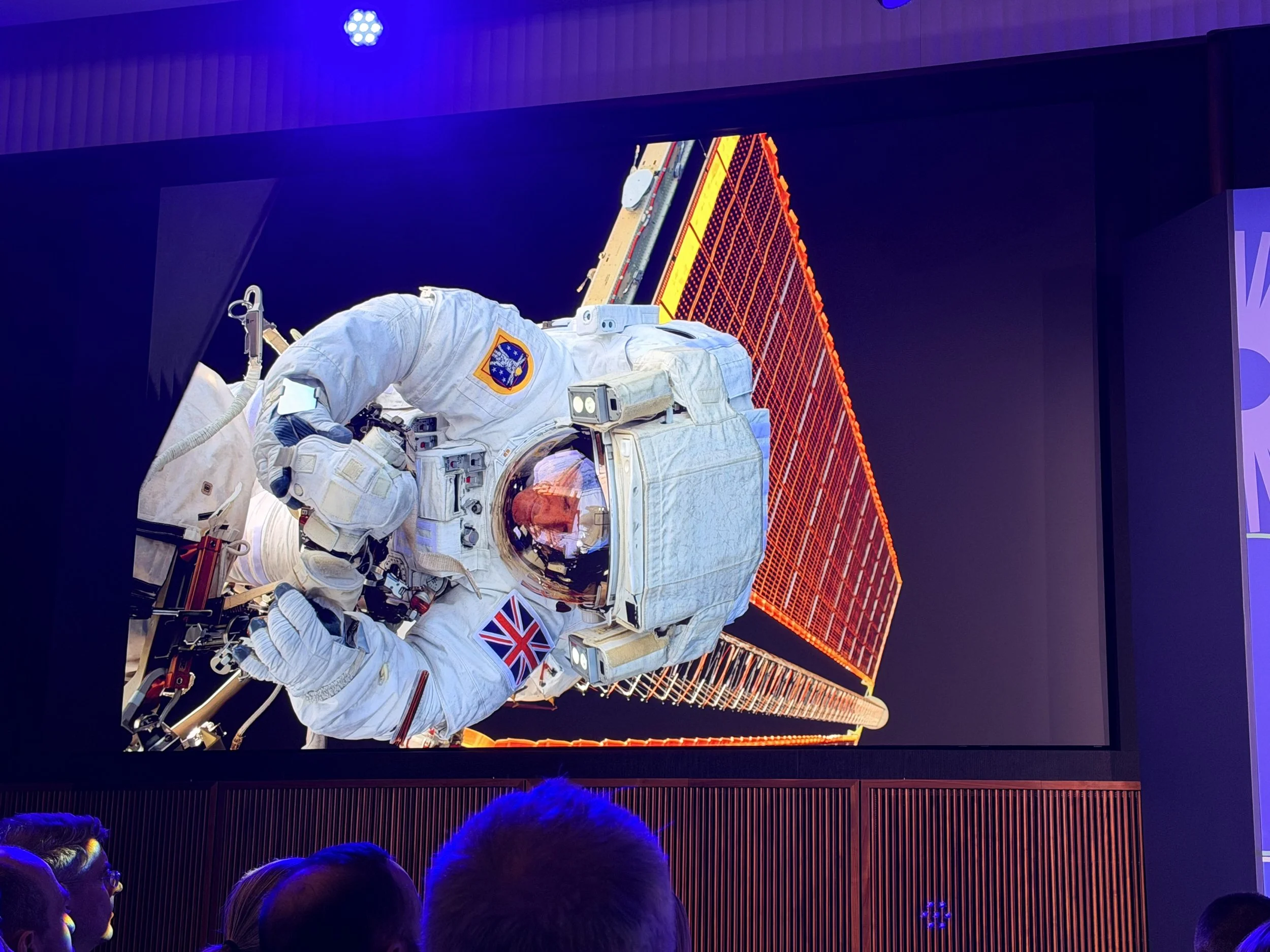
Tim Peake taking a moon walk
I'll be honest: when you hear "astronaut keynote at a legal conference," you might expect a polished motivational talk loosely connected to the theme. What we got was something far better. Tim Peake is a storyteller of the highest order, and every anecdote carried genuine weight for anyone in the business of managing risk, making decisions under pressure, and leading teams through uncertainty.
His opening set the tone perfectly. Just before launching into space, his instructor leaned in and offered two pieces of encouragement. First: keep an eye on the rocket, it was built by the lowest bidder. Second: a thousand things can happen during launch, and only one of them is good.
With pep talks like that, the legal profession suddenly feels rather low-stakes.
But here's where it became directly relevant to every leader in the room. Tim described the moment his spacecraft's thruster, electrical, and life support systems all failed simultaneously, just 17 metres from the International Space Station's docking port. Three simultaneous failures. Unprecedented. No simulator had ever thrown all three at once.
What did they do? They fell back on training. They established the facts. They generated options. They assessed risk. They took action.
Sound familiar? It should. Strip away the zero gravity and the spacesuits, and that's the decision-making process every managing partner, every GC, every founder should be running when things go sideways.

International Space Station
Tim's framework for good decision-making was elegant in its simplicity: gather the facts, generate high-quality options, apply your reasoning and risk matrix, and take action. Don't let uncertainty paralyse you. A good decision made at the right time with imperfect information is better than a perfect decision made too late.
Amazon's "two-way door" concept came up too, and it's one I think every lawyer should internalise. Most decisions are reversible. You buy one piece of tech. It doesn't work. You try another. You implement a process one way. It doesn't stick. You adjust. We treat too many business decisions as one-way doors when they're not. And that fear of irreversibility slows us down enormously.
Then came the spacewalk story. Tim and his colleague went outside to repair a solar panel. They finished early. Houston told them to wait ten minutes for the sun to go down before touching the live electrical panel. So two astronauts floated in the void, watching the sunset over Earth, in perhaps the most expensive smoke break in human history.
Minutes later, his colleague’s carbon dioxide sensor failed. Then water started leaking into his helmet, the same failure that had nearly drowned Italian astronaut Luca Parmitano years earlier. NASA's engineering solution? A snorkel and a nappy (behind the head). Tim's observation about this was priceless: sometimes the simple solutions are the best ones.
There's a lesson in that for every law firm spending six months on an AI implementation strategy. Sometimes the snorkel works.
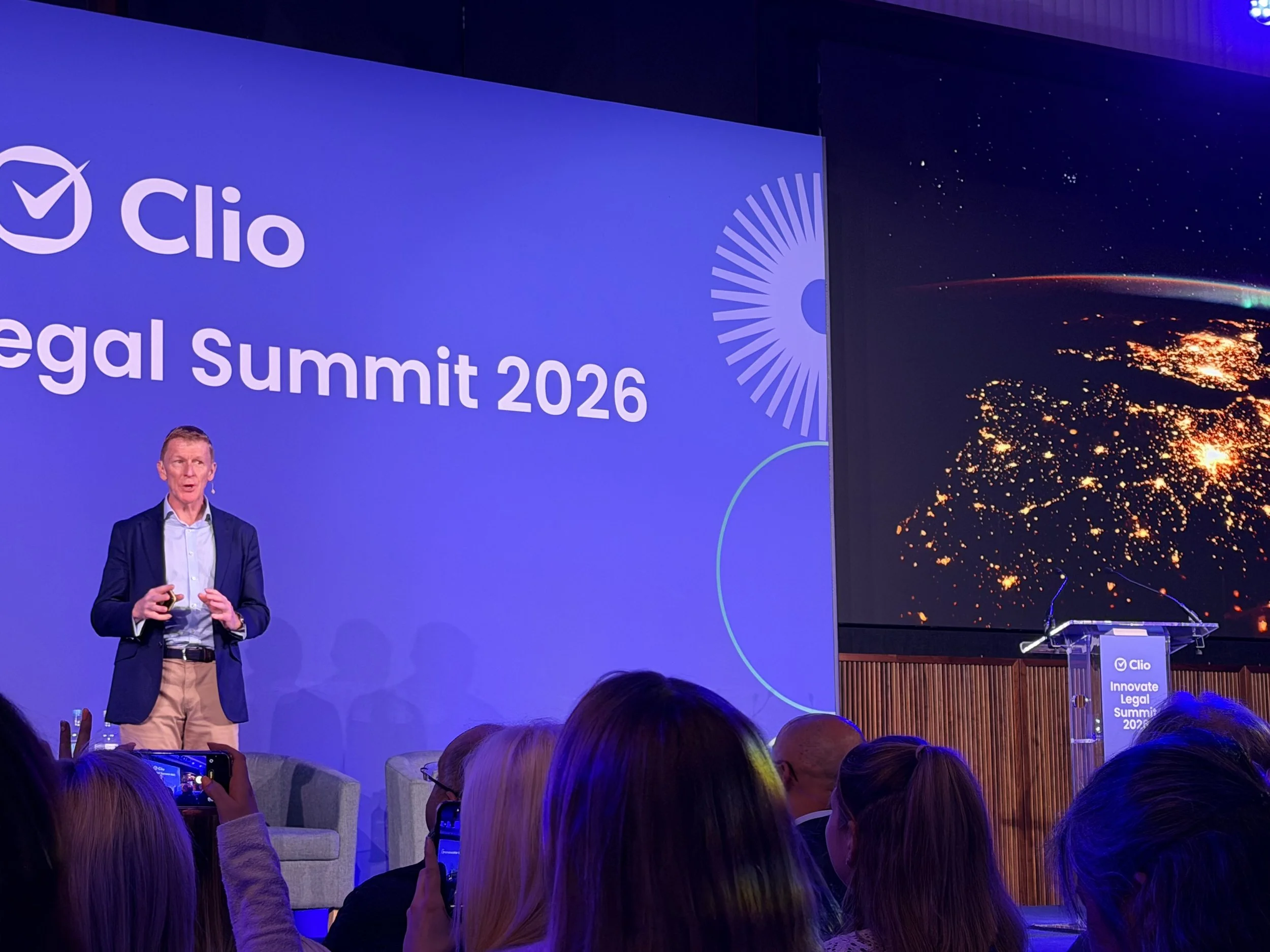
Tim Peake
His description of Earth from space was genuinely moving. The thin strip of atmosphere, just 16 kilometres thick. No visible borders between nations. The Sahara reflecting orange light back to the station. 16 sunrises and 16 sunsets every single day. He reminded us that from 400 kilometres up, the things that divide us are invisible. What you see is geology, beauty, and the fragile envelope of atmosphere that keeps everything alive.
I left that session with a phrase ringing in my ears: right people, right preparation, right plan. That's not rocket science. Except, in Tim's case, it literally is.
The Bits Between the Sessions: Where the Real Value Lives
If you've been to enough conferences, you know the magic often happens in the margins. The coffee queue conversations. The sponsor zone encounters. The moment someone says something that reframes how you think about your own practice.
A few of those moments today:
The conversation about the cost of not adopting AI. One speaker cited a figure of £100,000 per solicitor per year as the cost of inaction. Whether that number is precisely right is almost beside the point. The direction of travel is clear.
The debate about "disagree and commit," borrowed from Jeff Bezos's management philosophy and echoed by both Katie Best and Tim Peake. You don't have to agree with every decision. But once the decision is made, you support it publicly. If you genuinely can't, it might be time to ask whether you're in the right place.
The candid admission from multiple panellists that the legal AI tools currently available are ahead of where most firms are in their adoption. The technology isn't the bottleneck. The people are. And that's not a criticism. It's an observation. And it's exactly why Katie Best's session on the human side of change was the most important conversation of the day.
My Takeaway
I walked into The Chancery Rosewood this morning thinking I'd learn about legal tech. I walked out thinking about leadership, fear, decision-making, and what it means to create an environment where people feel safe enough to change.
Clio (the legal technology company) put together something genuinely excellent here. The production was polished, the speakers were world-class, and the content went far deeper than the usual "AI will transform legal services" narrative. Yes, AI will transform legal services. But transformation requires humans to transform too. And that's harder, messier, and more interesting than any technology demo.
If you weren't there, I hope this gives you a flavour. If you were, I'd love to hear what landed with you.
And if you're a law firm leader currently wrestling with AI adoption, change management, or the existential question of what your role looks like in three years, here are three things to do this week:
Read Dr Katie Best's The Ten Toughest Leadership Problems. It's the best leadership book I've encountered this year, and the SOLVE framework is immediately applicable.
Ask your team what they're afraid of. Not in an all-hands email. In a conversation. Over coffee. Actually listen to the answer.
Make a two-way door decision you've been putting off. Just choose. If it doesn't work, come back through the door and try another one.
As Tim Peake reminded us: when you get the right people, give them the right preparation, and execute the right plan, anything is possible.
Even running a marathon in space.
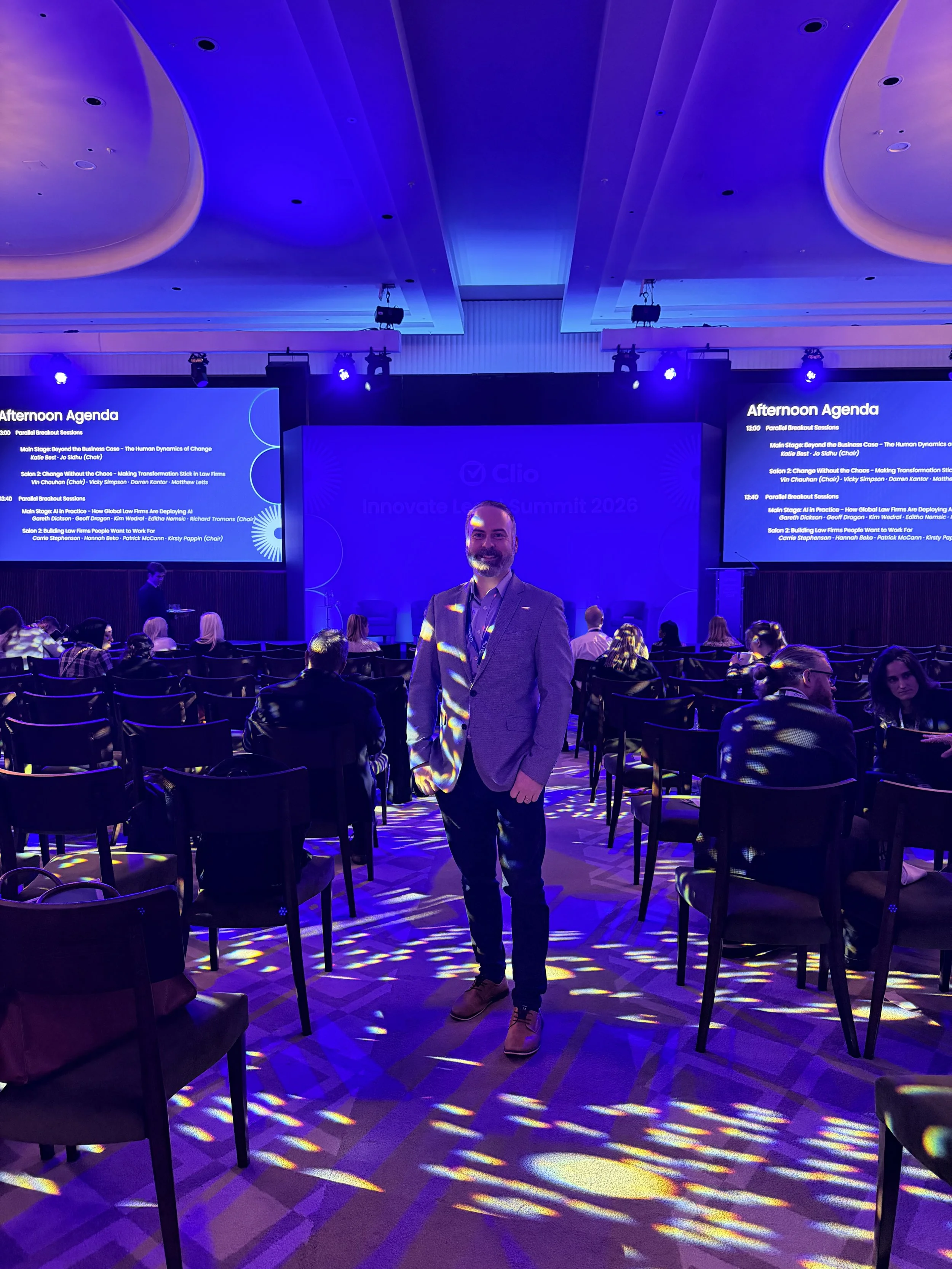
Rory O'Keeffe is the founder of RMOK Legal, a City of London-based Alternative Legal Service Provider specialising in commercial and technology contracts. He works as a Fractional General Counsel for startups and scale-ups, is recognised in Legal 500, and is the author of AI Advantage (2025). He also hosts the tech law podcast Beyond The Fine Print.
If this resonated with you, I'd love to connect. Drop me a message or follow me for more on the intersection of legal services, AI, and the human side of running a practice.
#LegalTech #AIinLaw #ClioInnovate2026 #Leadership #LegalInnovation #ChangeManagement #FractionalGC #TimPeake #DrKatieBest #SOLVEFramework #LawFirmManagement #LegalAI #FutureOfLaw #RMOKLegal #BeyondTheFinePrint